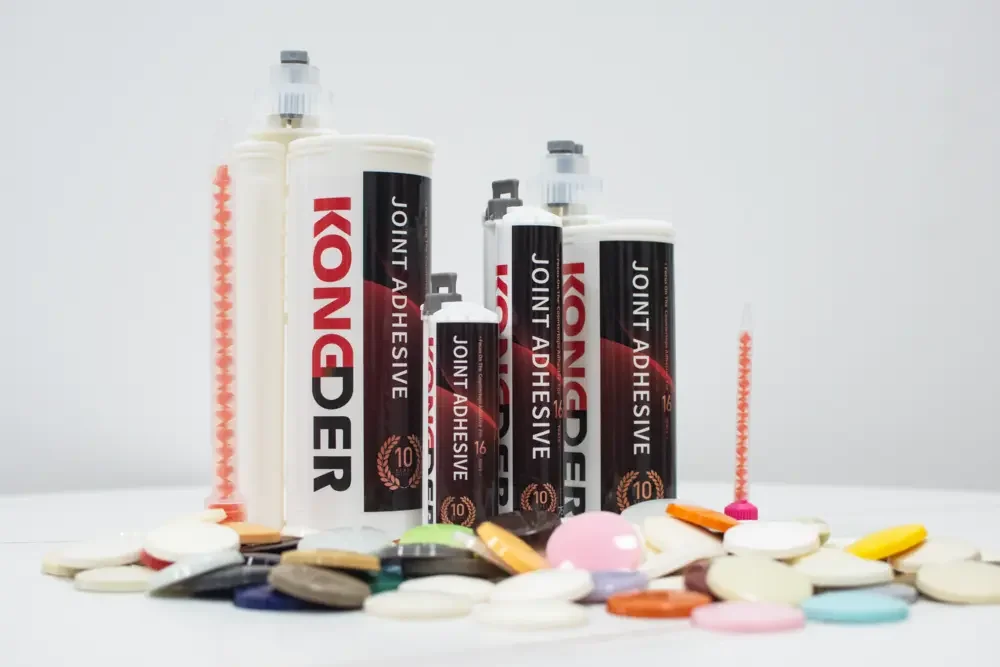
How to match countertop seam colour
Move from a colour code to an approved cured seam, using a representative surface sample and clear acceptance notes.
For countertop adhesive colour matching, use the exact surface reference and a cured trial seam on a representative sample. A colour name or phone photograph can start the discussion, but neither should be the sole basis for approving production material.
The aim is an acceptable appearance in the finished joint. “Invisible seam” is not a result that can be guaranteed for every surface, pattern, joint or lighting condition. Colour selection and seam preparation both matter.
What to send for a colour match
- Surface identity: manufacturer, collection, colour name and colour code.
- Actual material: an offcut or sample representing the slab or sheet being fabricated, where available.
- Appearance: finish, thickness and whether the surface is plain, translucent, speckled or strongly veined.
- Joint context: seam position, edge detail and whether the joint will cross contrasting colours.
- Reference images: a full view and a close-up in neutral lighting, without filters, as supporting information.
If the physical sample differs from a catalogue swatch, identify which material will be used for acceptance. Keep a labelled reference so both parties are discussing the same surface rather than different production lots or screen images.
How to compare a trial seam
- Agree on the candidate. Record the proposed adhesive reference and the surface sample it was selected against.
- Make a representative joint. Use the intended material, joint preparation, compatible cartridge tools and the product's specified procedure.
- Allow the specified cure and finishing sequence. Assess the finished trial rather than judging only the uncured bead.
- Compare in relevant lighting. Review under the lighting expected in the installation and from normal viewing distances as well as close up.
- Record the decision. Keep the surface reference, adhesive colour, batch reference, sample photographs and agreed acceptance notes together.
On a veined surface, one adhesive colour may blend with the background while contrasting with a vein crossing the joint. Discuss seam placement and the dominant surrounding colour with the fabricator before asking the adhesive to solve a pattern mismatch.
Keep repeat orders consistent
Reorder using the confirmed adhesive reference and surface details. If the surface supplier, material lot, finish, joint design or adhesive formulation changes, review whether another trial is needed. A previously approved sample is useful evidence, but it should be linked to the actual materials in the next order.
A short approval record can read: “Surface brand/code: __; sample reference: __; adhesive reference/batch: __; trial date: __; finish and lighting: __; accepted by: __; limitations: __.” This is a blank procurement template, not a claim about a completed customer project.
Choose the product family before the shade
Start with solid surface adhesive or joint adhesive as appropriate to the material. Confirm substrate compatibility and fabrication requirements first. A close colour is not proof of bond performance, project approval or a surface manufacturer's warranty coverage.
For a complete selection brief, see how to choose countertop adhesive. Include the trial quantity and destination when you request a colour matching discussion.